A furnace problem does not always begin with a cold house. Sometimes the first clue is a room that never feels comfortable, a filter that gets dirty quickly, or repeated starts that sound different from normal operation. Paying attention to those changes gives you better information when deciding whether to make a simple adjustment or schedule service.
These six tips cover practical furnace maintenance, useful troubleshooting observations, and the questions worth asking before approving a repair or replacement.
1. Check the Filter Without Guessing at Compatibility
Inspect the furnace filter monthly during regular use, then replace or clean it according to its condition and the manufacturer’s instructions. Disposable and reusable filters require different handling. Switch the system off before accessing the filter, following the equipment manual.
Match the specified size and install the filter with its airflow arrow pointing in the correct direction. A filter that does not fit properly can allow air to bypass it.
Do not assume the highest available MERV rating is automatically the best choice. Filtration must be compatible with the system’s airflow requirements. Ask a technician which filter options your equipment and filter cabinet support.
Write the installation date on the filter frame or record it on your phone. That simple habit makes maintenance easier to track than trying to remember whether you changed it before or after the last holiday.
2. Separate Thermostat Settings From Furnace Faults
Before reporting a lack of heat, check that the thermostat is in heating mode and the target temperature is above the displayed room temperature. Review programmed schedules, temporary holds, and batteries if the thermostat uses them.
The fan setting also matters. With the fan set to “On,” the blower may circulate air between heating cycles, making the air at a register feel cooler. “Auto” generally runs the fan as the system calls for it.
If the furnace still does not heat, record what happens instead of repeatedly resetting it. Does the blower run? Does the unit start and stop? Is an error code visible through the viewing window?
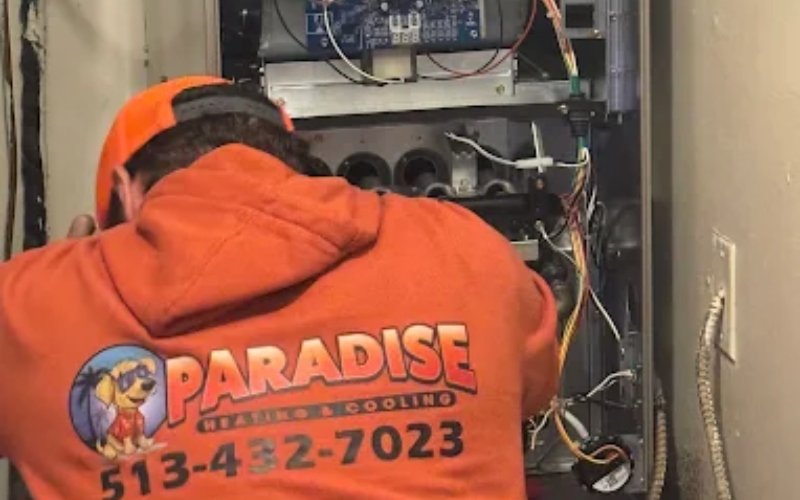
Paradise Heating and Cooling lists furnace repair, maintenance, and installation among its services. Providing those observations when requesting service can help explain the problem more clearly than simply saying the furnace seems broken.
3. Look Beyond the Furnace When Rooms Feel Uneven
Check whether furniture, rugs, or curtains obstruct supply registers or return grilles. Supply registers deliver conditioned air; returns provide a path back to the equipment. Both need unobstructed airflow.
Avoid closing multiple registers as a shortcut to directing heat elsewhere. Forced-air systems are designed around particular airflow conditions, and widespread register closure can interfere with operation.
If one room remains cold, note whether the problem changes when its door is open. Also record whether the issue is new or has existed for years. Those details can help distinguish a developing equipment problem from an ongoing distribution issue.
Duct leakage, inadequate return pathways, and differences in insulation can contribute to uneven temperatures. Raising the thermostat may overheat comfortable rooms without resolving the underlying cause. Ask for an assessment of the air distribution system alongside the furnace.
4. Ask What a Professional Maintenance Visit Includes
A furnace starting successfully does not prove every component is operating correctly. Professional maintenance should address the equipment’s condition and operation, with the exact tasks determined by its design.
For a fuel-burning furnace, discuss inspection of burners, fuel connections, venting, and the heat exchanger. Electrical connections, system controls, and blower operation also deserve attention. Condensing equipment has additional components associated with condensate removal.
When comparing an HVAC company in dayton, ask what the heating inspection includes and whether findings will be documented. A useful explanation identifies the issue, the evidence supporting it, and the proposed next step.
Schedule routine service before heavy heating demand when possible. Keep previous inspection records so a technician can compare recurring concerns rather than treating every visit as an isolated event.
5. Treat Carbon Monoxide Protection as Essential
Fuel-burning equipment requires attention to combustion safety. Carbon monoxide is colorless and odorless, so a normal smell inside the home does not establish that the furnace is operating safely.
Install carbon monoxide alarms on every level and outside sleeping areas, following the alarm manufacturer’s placement instructions. Test and replace alarms according to those instructions; they are not permanent devices.
If a CO alarm sounds, move everyone outside immediately and call emergency services from outside. Do not search for the source or reenter until responders give permission.
Alarms complement professional inspection. They do not replace maintenance or justify continued operation of equipment identified as unsafe.
6. Evaluate Replacement With More Than an Age Estimate
An older furnace deserves assessment, but age alone does not explain its condition. Ask about the diagnosed fault, repair cost, repair history, and any safety findings.
For replacement proposals, request a heating load calculation and an evaluation of existing ducts. Copying the old furnace’s capacity can repeat an earlier sizing mistake.
Compare installation scope and warranty conditions alongside equipment efficiency. A meaningful proposal explains what is included and how the selected system fits the home.
Also ask how the installer will verify airflow and system operation after installation, rather than stopping once the equipment runs.
Make Furnace Decisions With Better Information
Consistent filter checks, clear airflow paths, and accurate observations give homeowners a useful foundation for furnace care. Professional inspection handles the components and measurements that household checks cannot establish. When problems arise, describe the symptoms, ask for documented findings, and choose the next step based on the equipment and the home together.