The modern architectural landscape has shifted toward minimalism, open floor plans, and industrial aesthetics. While expansive glass walls and exposed concrete look stunning, they create an invisible problem: a sonic nightmare. In the professional world, noise is more than just a nuisance; it is a drain on productivity, a barrier to effective communication, and a major contributor to workplace stress. As businesses globally move toward more collaborative environments, the demand for sophisticated sound management has skyrocketed. It is no longer enough to simply put up four walls. Architects and facility managers are now prioritizing acoustic from the ground up, recognizing that the “sound” of a room is just as important as its “look.”
The Hidden Cost of Acoustic Neglect in the Office
In a busy workspace, the “cocktail party effect”—where multiple conversations overlap and compete for attention—makes focus nearly impossible. This is particularly true in open-plan environments where sound travels unchecked across the floor.
Integrating office acoustic solutions for open plan spaces is the most effective way to reclaim lost productivity. When employees aren’t fighting to hear themselves think, their cognitive load decreases, leading to higher-quality work and fewer errors.
Key Drivers for Better Acoustics:
- Focus and Concentration: Reducing ambient noise allows for “Deep Work” sessions.
- Speech Intelligibility: Ensuring that instructions in meetings are heard the first time correctly.
- Confidentiality: Preventing sensitive HR or financial discussions from leaking into the hallway.
Mastering the Fifth Wall: Acoustic Ceiling Systems
The ceiling is often the largest unobstructed surface in any commercial room, making it the primary offender for sound reflection. Traditional hard ceilings act like a mirror for noise, bouncing sound waves back down and creating a persistent echo.
Modern design has moved beyond the ugly, fiber-based tiles of the 1990s. Today, high-performance drop ceiling acoustic panels for commercial buildings offer a sleek, architectural finish while providing superior sound absorption. These systems are essential for large-scale venues, from bustling call centers to university lecture halls.
Advantages of Advanced Ceiling Treatments
- Uniform Sound Distribution: Evenly spaced panels ensure there are no “dead zones” or “echo chambers” in a large hall.
- Integrated Utilities: Modern panels are designed to house HVAC vents, sprinklers, and lighting seamlessly.
- Visual Depth: Using different heights or “clouds” can add a three-dimensional design element to an otherwise flat space.
The Aesthetic Shift: Where Light Meets Sound
Perhaps the most innovative development in the sector is the marriage of illumination and sound absorption. For a long time, designers had to choose between a beautiful light fixture and an effective acoustic panel.
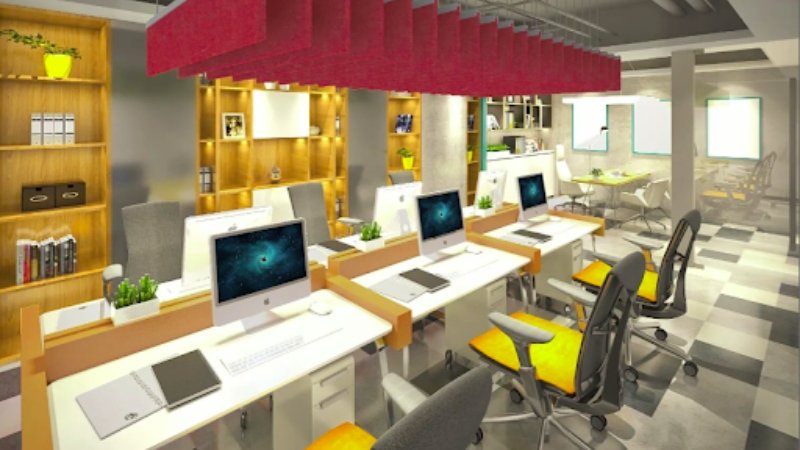
Now, acoustic lighting panels for open plan offices solve both problems simultaneously. These fixtures use specialized felt and fabric housings that “trap” sound waves, while high-quality LEDs provide task or ambient lighting. This is a game-changer for coworking spaces and creative agencies where every square inch of the ceiling is prime real estate.
Why Acoustic Lighting is Trending:
- Multi-Functional Design: It reduces clutter by combining two essential utilities into one product.
- Zonal Control: Hanging an acoustic pendant directly over a boardroom table creates an “acoustic umbrella,” isolating the conversation from the rest of the room.
- Customization: These fixtures come in various textures and colors, allowing them to serve as a design statement rather than just a utility.
Solutions Beyond the Office: Education and Healthcare
While the corporate world is a major adopter, acoustic innovation is equally vital in public sectors. In classrooms, the “signal-to-noise ratio” is a critical metric. If a child at the back of the room cannot distinguish the teacher’s voice over the hum of the hallway or the scraping of chairs, their learning is compromised.
Similarly, in healthcare, sound management is linked to patient recovery. Hospitals are notoriously loud environments; using specialized wall and ceiling tiles helps lower patient heart rates and ensures that medical staff can communicate clearly during emergencies.
Essential Considerations for Facility Managers
If you are looking to upgrade your property’s acoustic profile, it is important to look beyond just the price tag. Not all panels are created equal, and the application dictates the material.
- Fire Ratings: In commercial buildings, ensuring that panels are fire-rated is a legal necessity, not an option.
- Durability: In high-traffic areas like schools or corridors, panels need to be impact-resistant and easy to clean.
- Sustainability: Modern businesses are increasingly looking for eco-friendly solutions made from recycled PET or sustainable timber.
Working with a Professional Acoustics Company
Because sound behaves in complex ways—reflecting off hard surfaces, diffracting around corners, and vibrating through structures—a “one size fits all” approach rarely works. Partnering with a dedicated acoustics firm allows for sound testing and precision mapping. This ensures that you aren’t just buying panels, but rather a calculated solution that addresses the specific frequencies causing trouble in your space.
Conclusion
The trend toward better acoustics is a reflection of a larger shift in business: putting people first. By investing in high-quality ceiling systems, integrated lighting, and wall treatments, you are creating a sanctuary for focus and collaboration. Silence may be golden, but in the modern commercial world, it is also highly profitable.