
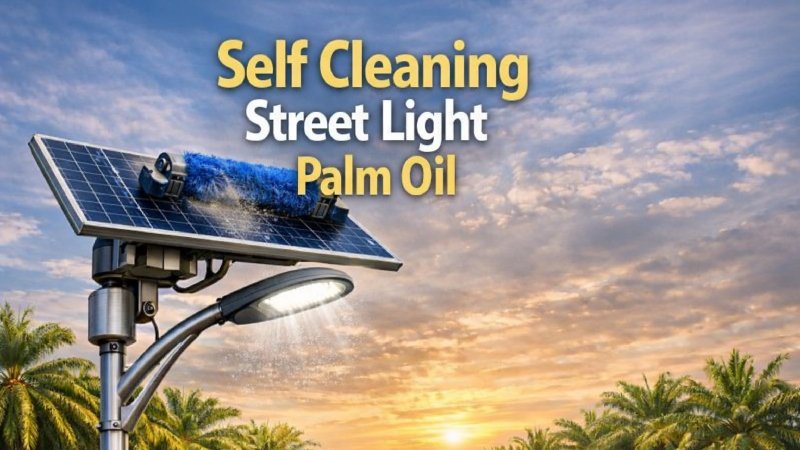
Street lighting is vital for safety, transportation, and community development. Traditional street lights often face maintenance challenges due to dust, debris, and environmental pollution, which reduce energy efficiency and require frequent cleaning. The self-cleaning street light palm oil system offers a modern solution by combining solar energy, automated cleaning mechanisms, and eco-friendly materials derived from palm oil. This system ensures consistent illumination, reduces maintenance costs, and supports sustainable infrastructure. It is especially beneficial in rural areas, agricultural zones, and remote locations where access for maintenance is limited. By integrating renewable energy and intelligent cleaning technology, these lights provide an environmentally responsible and long-lasting solution for modern outdoor lighting.
What Is a Self-Cleaning Street Light Palm Oil System?
A self-cleaning street light palm oil system is an advanced outdoor lighting setup designed to automatically clean its solar panels and lamp surfaces. Dust and debris often reduce the efficiency of traditional solar street lights by blocking sunlight from reaching the panels. Self-cleaning mechanisms prevent this issue by removing particles without manual intervention. Palm-based derivatives are used in coatings and lubricants, making the system environmentally friendly. Hydrophobic coatings repel water and dust, while biodegradable lubricants reduce mechanical wear. The combination of solar energy and palm-derived materials ensures the system operates efficiently, sustainably, and reliably in various conditions.
Why Are Self-Cleaning Street Lights Important?
Cleanliness is critical for solar-powered lighting. Dust, pollution, and dirt accumulation can reduce panel efficiency by up to 30%, resulting in dim lighting and lower energy output. The self-cleaning street light palm oil system addresses this problem by automating cleaning processes. Automated cleaning reduces the need for frequent maintenance visits, saving both labour and operational costs. Additionally, consistent illumination improves road safety for pedestrians and vehicles, particularly in rural and agricultural areas. By keeping solar panels clean, the system ensures maximum energy production while extending the lifespan of the lighting components.
How Does a Self-Cleaning Street Light Palm Oil Work?
The system combines solar power, battery storage, and automated cleaning technology. During the day, solar panels capture sunlight and store energy in rechargeable batteries. At night, LED lights are powered by this stored energy, providing consistent illumination. Automated cleaning mechanisms activate either at scheduled intervals or based on sensor detection. Cleaning methods may include micro-vibrations, rotating brushes, or hydrophobic coatings that repel dust naturally. These mechanisms require minimal energy, ensuring maximum efficiency. By preventing dust accumulation, the self-cleaning street light palm oil system maintains optimal performance, energy efficiency, and long-term reliability, even in remote or dusty environments.
Which Technologies Are Used in Self-Cleaning Street Lights?
Hydrophobic Surface Coatings
Hydrophobic coatings repel water and dust, allowing natural cleaning during rainfall. Palm oil derivatives can be incorporated into these coatings, creating eco-friendly and biodegradable surfaces.
Mechanical Cleaning Systems
Motorized brushes or wipers remove dust from solar panels periodically. These systems are effective in high-dust environments and maintain consistent energy output.
Micro-Vibration Technology
Gentle vibrations dislodge dust particles from solar panels. This low-energy solution is particularly useful in dry regions.
Electrostatic Dust Repulsion
Electrostatic fields push dust away from panel surfaces, minimizing mechanical wear and reducing energy usage.
These technologies ensure that self-cleaning street light palm oil systems operate efficiently and maintain long-term reliability.
What Are the Main Components of a Self-Cleaning Street Light System?
Solar Panel
Captures sunlight and converts it into electricity. Efficiency depends on the cleanliness of the surface.
LED Light Module
Provides bright, energy-efficient illumination. LEDs have a long lifespan, reducing replacement costs.
Rechargeable Battery
Stores energy generated during the day and powers the lights at night.
Smart Controller
Manages energy distribution, lighting schedules, and automated cleaning cycles.
Self-Cleaning Mechanism
The key feature is that it removes dust and debris using brushes, vibrations, or coatings.
Together, these components ensure consistent lighting performance and long-term sustainability.
Where Are Self-Cleaning Street Lights Commonly Used?
These systems are ideal for areas where manual maintenance is challenging. Rural roads, agricultural plantations, remote highways, and village pathways often experience dust and dirt accumulation. Solar-powered systems operate independently of the grid, making them perfect for locations lacking electricity infrastructure. The self-cleaning street light palm oil solution ensures reliable lighting even in high-dust conditions. Urban areas with pollution challenges can also benefit from this technology. Its low maintenance and sustainability features make it a practical solution for both rural and city environments.
What Are the Benefits of Self-Cleaning Street Light Palm Oil Technology?
-
Reduced Maintenance: Automated cleaning eliminates the need for frequent manual intervention, saving time and costs.
-
Improved Energy Efficiency: Clean panels capture more sunlight, generating maximum energy.
-
Extended Equipment Lifespan: Regular cleaning reduces wear and tear on sensitive components.
-
Environmentally Friendly: Solar energy and palm-based coatings reduce reliance on fossil fuels and synthetic chemicals.
-
Reliable Lighting: Ensures consistent illumination in remote or dusty areas.
These benefits make it an ideal choice for sustainable infrastructure projects.
How Does This Technology Support Sustainable Infrastructure?
Sustainability is increasingly critical for modern infrastructure. Self-cleaning street light palm oil systems reduce reliance on fossil fuels by using solar energy. Palm-based coatings and lubricants replace synthetic chemicals, making the system biodegradable and eco-friendly. Automated cleaning also reduces the need for maintenance travel, minimizing fuel consumption and carbon emissions. By combining renewable energy with low-impact materials, the system provides a greener approach to outdoor lighting, aligning with environmental goals for urban and rural communities alike.
What Is the Future of Self-Cleaning Street Lighting?
The future of street lighting is smart, automated, and sustainable. Self-cleaning systems may integrate AI and advanced sensors to monitor dust levels and activate cleaning only when necessary. Smart controllers could optimize energy consumption by adjusting brightness based on activity or environmental conditions. Nanotechnology may further improve coating durability and reduce wear. With these innovations, self-cleaning street light palm oil systems will become more efficient, reliable, and widely adopted in both urban and rural areas, supporting safer, cleaner, and energy-efficient public infrastructure.
FAQs About Self-Cleaning Street Light Palm Oil
Q1: How often does a self-cleaning street light clean itself?
A1: Cleaning cycles are automated and can be triggered based on time intervals or dust sensor readings. Some systems also use rainfall to assist cleaning.
Q2: Can palm oil derivatives be used safely in outdoor lighting?
A2: Yes. Palm oil-based coatings and lubricants are biodegradable, eco-friendly, and safe for outdoor applications.
Q3: Do these systems work in rainy or humid regions?
A3: Yes. Hydrophobic coatings and automated cleaning mechanisms function effectively in both dry and wet environments.
Q4: How long do self-cleaning street lights last?
A4: With proper design, these systems can operate efficiently for 10–15 years, depending on component quality and environmental conditions.
Q5: Are they cost-effective compared to traditional street lights?
A5: Yes. While initial installation costs may be higher, reduced maintenance and energy efficiency make them cost-effective over time.
Conclusion
The self-cleaning streetlight palm oil system combines renewable energy, automated cleaning, and sustainable materials to provide a reliable, low-maintenance, and environmentally responsible lighting solution. By preventing dust accumulation and improving efficiency, it ensures consistent illumination in urban, rural, and agricultural environments. Its applications range from plantation roads to city streets, offering safety, sustainability, and long-term cost savings. As smart infrastructure continues to grow globally, these systems represent the future of efficient, sustainable, and intelligent outdoor lighting.
Visit Prohomeinsight.com for more details.